Do-It-Yourself Projection Screen | ||
| Welcome to my screen construction web page. This small project started because I needed a 16 x 9 projection screen, and didn't see the value in the commercial tensioned screens, which run $1000 and up here in Canada. While hanging out in the AVS Forum, I learned that some people were using 'blackout cloth' with good results. So I decided to build my own tensioned screen using that material and some cheap lumber. Here are the details: | ||
|
| ||
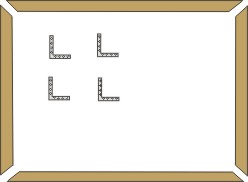 |
This shows the parts used to make the
screen. It's really very simple. I used 1 x 4 fir framing pieces,
then mitered the ends using a 10" miter saw. I used Fir because it's
hard, meaning it will be more rigid and hold staples better. I don't
know if this is necessary. You could save a few dollars using a
cheaper lumber. The other parts are some plain old metal angles from
Home Depot, and some screws. For Screen cloth, I went to 'FabricLand', and bought some 'blackout cloth' that is used to line curtains for light blocking. This material has an off-white side, and a white side. To my untrained eye, the material on the white side looks exactly like a matte white screen material. Same color, texture, and gain, which I believe is around 1.3 (based on comments from other people who have used this stuff for a projection screen). This material comes on a roll 54" wide, and can be stretched a couple of inches in width, meaning you can make a 96 x 54. 16:9 screen with it. I paid $8.54 per linear yard. Finally, I purchased 3 yards of a felt-like black cloth, which I will staple to the framing members. | |
|
| ||
| This image shows the black cloth
stapled around each framing member. The first one I did wound up
having a couple of wrinkles in it, because I tried to staple one
side first all down the length of the framing piece, then staple the
other. I had a tough time this way. On the other pieces, I basically
worked my way down the frame, stapling the cloth tight as I went.
This worked perfectly. |
 | |
|
| ||
 |
This image shows some detail about the
stapling, and how the angle pieces were screwed on to give the frame
some rigidity (in this picture, the screws weren't in yet - I used
3/4" wood screws, and put one in each hole). One word about the
stapling: If your staple gun doesn't set the staples into the wood
well, then continue pulling on the cloth while you hammer down the
staple. That way, the tension force is spread across the whole
staple instead of just the prongs. This picture also shows how I finished the ends of each piece. Basically, I just folded the cloth around the ends and stapled it down, much like wrapping a Christmas present. All that was done prior to assembling the frame pieces. | |
|
| ||
| The next step was to stretch the cloth
onto the frame. Rather than describe it, I suggest going to this
site: How to stretch
a canvas. However, this site shows how to stretch a canvas for a
painting. This means the face of the cloth is stretched over the
front of the frame and pulled behind it and stapled on the sides. In
our case, we want the 'face' of the cloth behind the frame facing
through it, and we want the staples on the back. So I laid the frame
face down, laid the cloth face down over the back, then pulled it
tight and stapled according to the instructions on that web site. It
was easy, and took maybe half an hour. |
 | |
|
| ||
 |
This is the frame with the screen
stretched across the back, face down. If you find that the screen is
too flexible after it's all done, I would recommend nailing some
1/16" ply or MDF to the back. That would make a 'composite'
structure that should be extremely strong, and would also protect
the screen from puncture damage. My screen turned out perfectly
flat, so I didn't have to do that. | |
|
| ||
| Here's the finished project, although
this photo doesn't do it justice. It looks very professional, and
the black cloth border makes for a great mask. The frame is very
strong where it counts, which is in the ability to hold its tension
(i.e. the frame pieces won't sag or bow in). However, it's fairly
flimsy in torsion, which means that you may have to bolt all four
corners to the wall. I got lucky, and mine hangs completely flat, so
I just screwed a couple of flat metal hangers to the back and hung
it from the unfinished framed wall of my theater to test it out and
get a feel for the geometry of the room, projector mount, etc.
|
 | |
|
| ||
| I'm extremely happy with the way the screen came out -
movies look gorgeous, and there's not a flaw in the surface. No
creases, wrinkles, uneven finish, etc. It really does look like a
professional movie screen, and my total cost was $75. It took me two
nights to build, working about 2 hours a night, including the time
it took to buy the parts. If I were going to build it again, one change I might make would be to get some rails and spline used to make 'fly screens', and use that to pin the fabric down in the back. That way, if the fabric gets damaged, or develops wrinkles, you could simply pull out the splines and stretch a new cloth into place. I'd like to thank everyone on the AVS Forum for all the help and suggestions I've gotten there. If you're into home theater, you simply must hang out there. | ||
